Introduction to Indian Cuisine: Flavors & Traditions
Explore Indian cuisine’s rich flavors and timeless traditions—all tailored for busy lives in the GTA. Whether you’re after history, signature spices, or time-saving meal options, these key insights bring delicious inspiration right to your table.
- Indian cuisine blends over 5,000 years of tradition so every meal connects you to a vibrant history of community, innovation, and global influence.
- Bold, signature spices like turmeric, cumin, and garam masala deliver unforgettable flavor while keeping home cooking and meal kits exciting and approachable for everyone.
- Regional specialties—from North India’s creamy curries to South India’s rice-based feasts—ensure there’s a unique dish for every craving, dietary need, or family night.
- Cultural and religious traditions shape every recipe, with vegetarian, Halal, and gluten-friendly meals making Indian cuisine naturally inclusive and adaptable.
- Fast, affordable meal solutions—including chef-prepped Indian dishes starting at just $5.99 per serving—let you bring restaurant-quality flavors home without stress or kitchen mess.
- Food safety is always a top priority, with trusted providers using SQF- and HMA-certified kitchens for absolute peace of mind in every bite.
- Simple starter tips—like building a basic spice kit or prepping a double batch—save time and make exploring Indian meals easy for even the busiest schedules.
- Local testimonials highlight real convenience and satisfaction, proving Indian cuisine is the perfect choice for GTA families, students, and professionals.
Discover more in the full article to bring the rich story—and unbeatable convenience—of Indian cuisine to your next meal.
Introduction
What if you could savor the flavors of Bollywood and ancient palaces—without leaving Brampton or battling kitchen chaos after work?
For busy professionals, students, and families across the GTA, squeezing in variety, restaurant-quality taste, and real comfort at dinnertime can feel impossible.
Yet Indian cuisine delivers all of that (and more), offering options that are:
- Affordable (starting at just $5.99 per serving)
- Customizable for every dietary preference—including vegetarian, vegan, and halal
- Effortlessly packed with flavor and tradition
Juggling commute schedules, last-minute meetings, or tired weeknights doesn’t mean settling for bland takeout or skipping real comfort foods.
With EZeats, you can enjoy chef-cooked, home-style Indian meals—rich curries, fluffy breads, and vibrant sides—delivered fresh, fast, and safely to your door.
Did you know? Over 45% of multicultural households in Toronto now order Indian meals every month—making it one of the city’s most sought-after dining choices.
From family feasts to solo study sessions, Indian flavors are fueling GTA lifestyles with a blend of history, health, and heartwarming tradition.
In this guide, you’ll discover:
- The surprising history behind your favorite dishes
- The essential spices and ingredients that create bold, signature flavors
- How regional traditions make every bite unique
- Tips to experience Indian cuisine at home—no stress, all convenience
- EZeats’ commitment to food safety, halal standards, and inclusive options
Craving more than just a quick meal?
Get ready to unlock vibrant flavors, save time, and explore a culinary journey as rich as your schedule is busy.
Here’s how Indian cuisine’s past and present come together—making every bite in Toronto truly unforgettable.
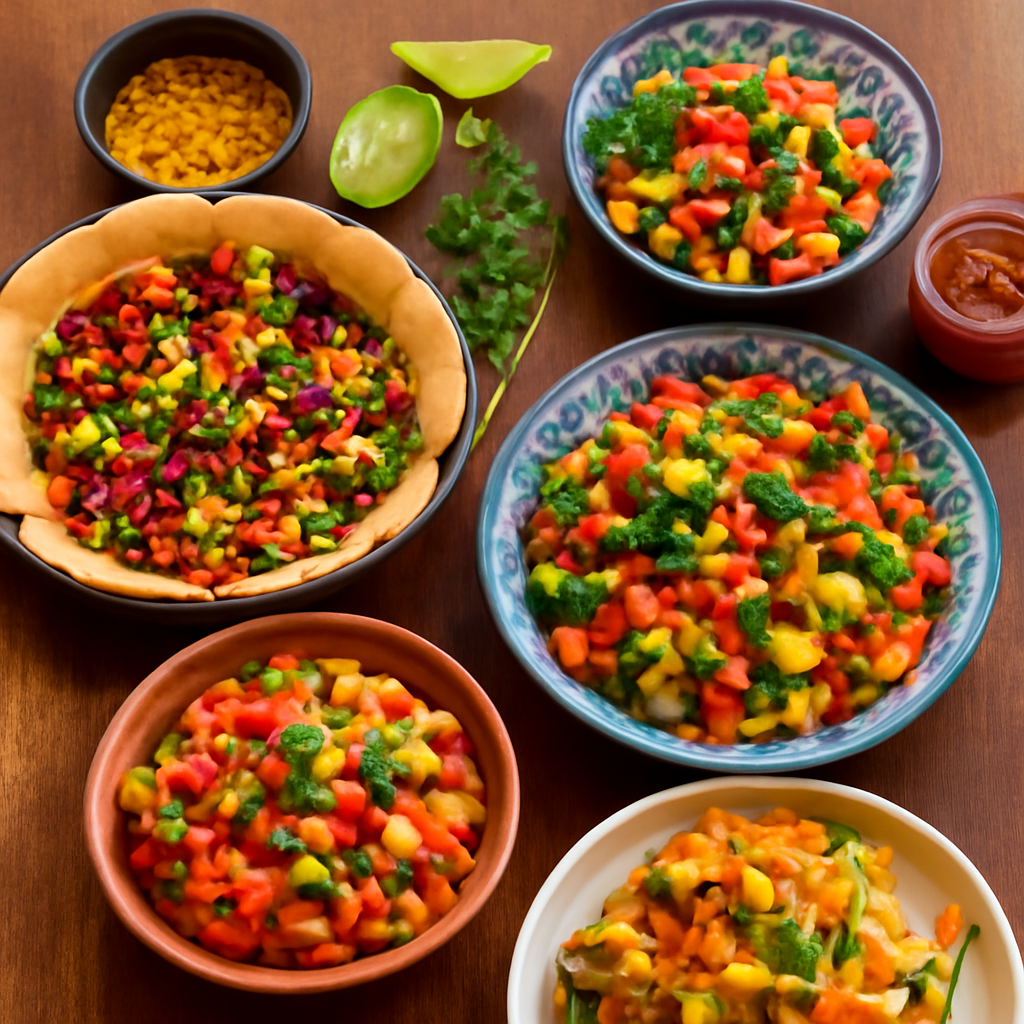
Historical Roots of Indian Cuisine
Picture this: over 5,000 years ago, the Indus Valley Civilization was already grinding turmeric, roasting barley, and baking bread in early tandoor ovens.
Wheat, barley, rice, and lentils—your pantry staples today—were essentials for these ancient urbanites.
Ancient Practices and Culinary Innovation
From the start, India’s food culture meant cooking to connect—with each dish passed down, new stories and layers were added.
Some core ancient practices include:
- Pit-roasting and tandoor baking: Methods still used for naan and tandoori dishes now
- Bartering with neighbors: Trade brought new flavors as early as 3000 BCE
Mouthwatering scenario: imagine warm flatbread pulled from a clay oven, just as home cooks did thousands of years ago.
Waves of Influence: Vedic to Mughal Era
Centuries later, the Vedic Age introduced fresh ideas:
- Rituals with clarified butter (ghee), yogurt, and dairy-rich foods
- Growing emphasis on vegetarian meals and festive feasts
The Mughal Empire (16th–19th century) turned Indian dining into an art of luxury:
- Lavish gravies with cream, saffron, and dried fruit
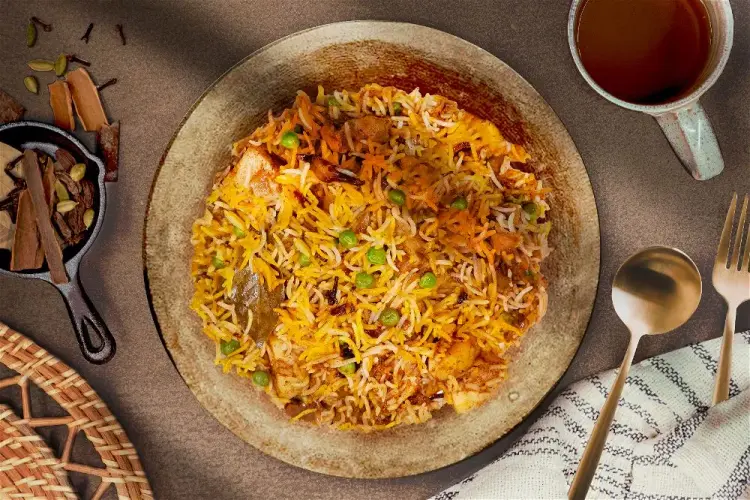
- Signature dishes like biryani and rich pilafs
- Tandoori cooking, slow-cooked meats, and fragrant spiced sauces
As you savor a bowl of butter chicken, you’re tasting this royal legacy.
Migration, Trade, and New Ingredients
Trade networks and migration made India a spice and ingredient melting pot.
Key arrivals over time included:
- From the Portuguese: chilies, tomatoes, potatoes—none native to India but now essentials
- Via Central Asia: pilaf techniques, nuts, and dried fruits
Each wave layered new flavors on the existing spread, growing the diversity of regional menus and local flair.
Why It Matters Today
Every meal today connects back to this incredible tapestry:
- Lunch in Brampton? Paratha and dal trace roots to ancient wheat fields and lentil crops.
- Order of Rogan Josh? You’re enjoying Mughal masterworks that shaped global perceptions of Indian cuisine.
Indian cuisine is not just food—it’s a story told through every spice and spoonful.
For busy diners in Toronto, knowing the rich history in every bite makes every meal even more meaningful, whether sharing classic tandoori or discovering something entirely new.
Signature Flavors and Essential Ingredients
The Core Spice Palette
Indian cuisine’s unmistakable flavor starts with a signature blend of spices—everyday essentials that fill kitchens from Brampton to Bangalore.
Whether you’re stirring a creamy curry or grilling tandoori, these foundational spices are at the heart of almost every dish:
- Turmeric: bright golden color, earthy aroma, health-boosting antioxidant
- Cumin and Coriander: warm, nutty and citrusy backbone in many spice blends
- Cardamom, Cinnamon, Cloves: sweet and spicy notes, perfect for both savories and desserts
- Black Pepper and Mustard Seeds: bold heat and flavor pop, often added whole
- Regional Garam Masala: a house-blend of ground spices, changing from north to south
Here’s the pro tip:
Whole spices sizzle in hot oil or ghee to release their essential oils and fragrance, while ground spices are often added after for deeper flavor.
“A pinch of the right spice can turn a simple meal into a celebration.”
Herbs, Aromatics, and Flavor Builders
Picture this: onions, garlic, and ginger sizzling in golden ghee, filling your kitchen with a savory aroma.
Ask any chef—the secret is balancing these essential aromatics:
- Onions, Ginger, Garlic: the classic base for countless curries, dal, and vegetable dishes
- Fresh Coriander and Curry Leaves: add brightness and lift to finish any meal
- Ghee, Yogurt, and Paneer: creamy richness especially in North and West Indian classics
- Coconut, Tamarind, Mustard Oil: signature in South and East India for tang, depth, and silky texture
It’s these building blocks that create dishes so layered and bold, you’ll savor every bite.
“The aroma of ginger and spices signals a great meal is just minutes away.”
Staples: Grains, Pulses, and Dairy
Indian dinners are all about comfort and nourishment—with staples designed for busy nights and big families.
- Wheat Breads (Roti, Naan): favorites across North India, ideal for scooping up curries
- Rice: the showstopper down south and in the east, served fluffy, fragrant, or fermented (think Idli and Pakhala Bhata)
- Pulses (Lentils, Chickpeas, Mung Beans): the foundation of hearty dals and everyday meals from coast to coast
- Dairy (Ghee, Paneer, Yogurt): adds flavor, texture, and satisfying richness
These ingredients form the backbone of iconic meals—like butter chicken with naan, masoor dal with rice, or sambar and dosa—making Indian cuisine both diverse and deeply comforting.
No matter which region you choose, Indian cooking is built on a vibrant palette: bold spices, fresh aromatics, and wholesome staples. Explore a few basics and you’ll unlock endless meal possibilities that feel both exotic and familiar—ready in just minutes, right at home.
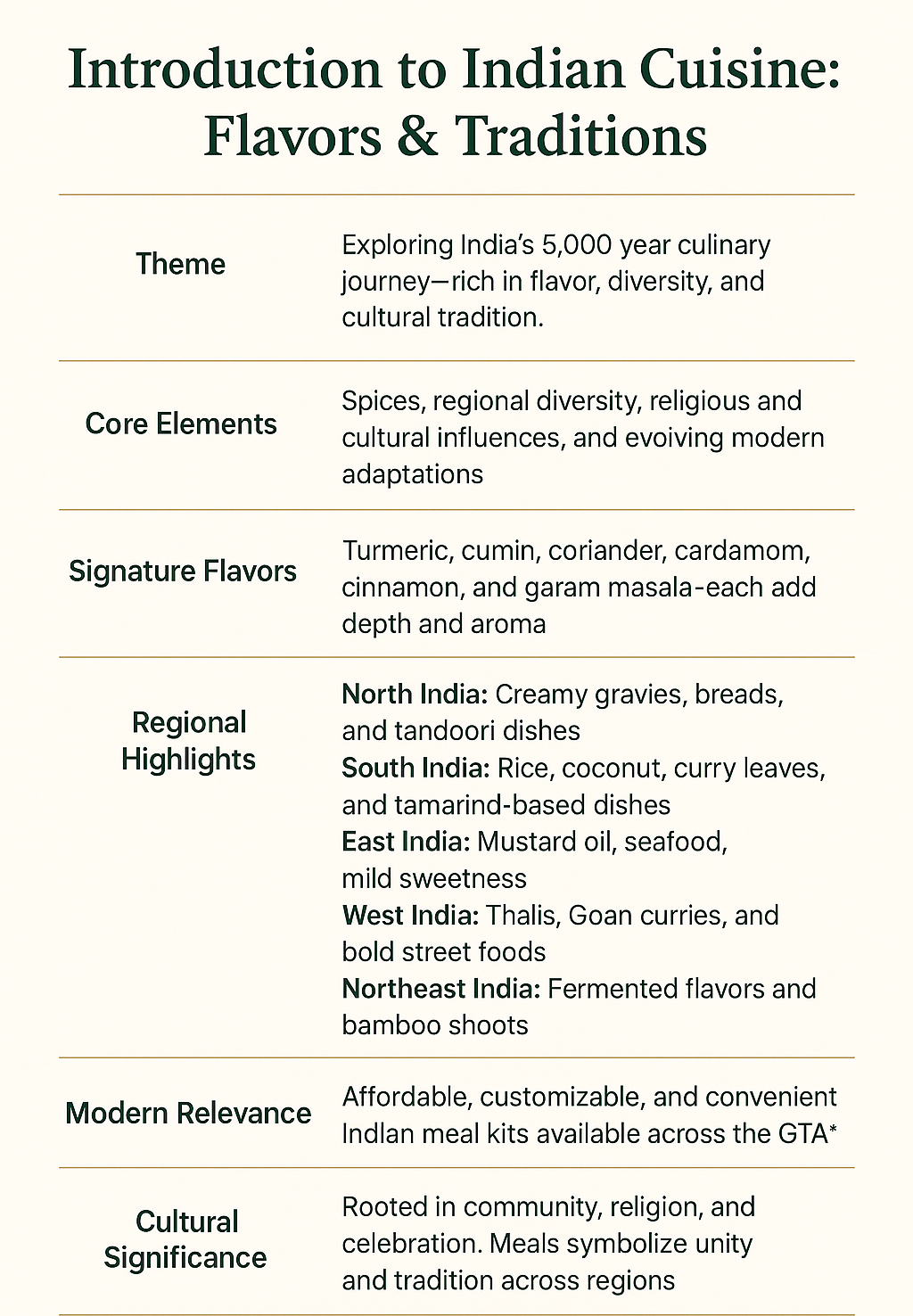
| Introduction to Indian Cuisine: Flavors & Traditions | |
|---|---|
| Theme | Exploring India’s 5,000-year culinary journey—rich in flavor, diversity, and cultural tradition. |
| Core Elements | Spices, regional diversity, religious and cultural influences, and evolving modern adaptations. |
| Signature Flavors | Turmeric, cumin, coriander, cardamom, cinnamon, and garam masala—each adding depth and aroma. |
| Regional Highlights |
|
| Modern Relevance | Affordable, customizable, and convenient Indian meal kits available across the GTA starting at $5.99 per serving. |
| Cultural Significance | Rooted in community, religion, and celebration—meals symbolize unity and tradition across regions. |
| Quick Tips |
|
| Food Safety | SQF- and HMA-certified kitchens ensure Halal, vegetarian, and allergy-safe dining experiences. |
| Conclusion | Indian cuisine blends heritage and modern convenience—bringing bold flavors, inclusivity, and comfort to every table. |
Regional Traditions and Culinary Identity
Flavor Journeys Across India
Indian cuisine is like a culinary road trip—each region serves up something unforgettable. Picture steaming butter chicken in Delhi, fluffy idlis on a South Indian breakfast table, or tangy fish curry simmering in a Bengali kitchen.
More than 250 million Indians eat rice as a staple, while wheat bread dominates further north. Regional specialties aren’t just about taste—they also reflect geography, history, and community.
North India: Creamy Curries & Baked Breads
- Famous dishes: Butter chicken, Rogan Josh, Dal Makhani, succulent tandoori chicken.
- Breads: Naan, roti, and paratha made from wheat flour—often piping hot from a traditional tandoor oven.
- Key cooking techniques:
- Tandoor grilling (clay ovens)
- Slow-cooked, spice-laden gravies
- Rich additions of ghee, cream, and slivered nuts.
- Signature flavors: Moderate to bold spicing, creamy and nutty textures.
“North Indian food: Where comfort meets richness—every bite is a warm hug.”
South India: Rice, Coconut & Bright Flavors
- Staples: Rice serves as the backbone—dosa (crispy crepe), fluffy idli (steamed cake).
- Building blocks: Coconut, curry leaves, and tamarind set dishes apart.
- Mainstays:
- Lentil stews like sambar and rasam fuel busy mornings and big family dinners.
- Chutneys—coconut, tomato, peanut—add variety with a single spoonful.
- Focus: Pure vegetarian plates meet spicy coastal seafood feasts.
“In South India, breakfast isn’t just a meal—it’s a celebration of rice in every form.”
East India: Gentle Sweetness & Signature Oils
- Iconic flavors: Mustard oil, poppy seeds, and a hint of natural sweetness.
- Dishes: Machher Jhol (fish curry), Mishti Doi (sweet yogurt), and fermented Pakhala Bhata.
- Traditions:
- Loads of freshwater fish and rice
- Creative use of gentle, aromatic spices.
West India: Thalis, Street Eats & Spice Adventures
- Diversity at every meal: From veggie Gujarat thalis to Goan shrimp curries.
- Techniques: Pickling, fermentation, and even vinegar stolen from Portuguese influence.
- Local legends:
- Dhokla (spongy snack)
- Vindaloo (fiery Goan curry)
- Dal Baati Churma (smoky Rajasthani delight).
Northeast India: Fermented Finds & Wild Greens
- Unique twists: Fermented bamboo shoots, smoky meats, and leafy xaak bhaji.
- Influences: Southeast Asian flavors and inventive preservation techniques.
- Unforgettable bites: Bamboo shoot pickle, tender smoked pork, and tangy rice beer.
“Taste the Northeast, and you taste the wild—earthy, smoky, beautifully different.”
Each region of India tells a food story that’s bold and colorful, just like the dishes themselves. Busy families in Toronto or Brampton can now skip borders, not flavors—with every meal promising a passport to a new experience.
The Cultural Context of Food
Religion, Festivals, and Community Traditions
Indian cuisine is shaped as much by community and belief as by geography or taste. Across cities like Toronto and Brampton, you’ll notice how food choices reflect life’s deeper values, tying each meal to ritual, identity, and celebration.
For example:
- Hindu households may serve strictly vegetarian dishes, especially on festival days or during fasting periods.
- Muslim families prioritize Halal preparations, making sure each ingredient is certified for both flavor and faith.
- Jain diets exclude root vegetables, while Sikhs champion communal meals (langar) that are vegetarian and free for all.
Imagine a table lined with bright Diwali sweets, trays of fragrant biryani for Ramadan Iftar, or a banana leaf feast at Onam—each dish preserving a centuries-old tradition.
Festivals aren’t just about food; they’re about connecting with friends, neighbors, and the recipes passed down through generations. “When we prepare laddoos for Diwali, it’s like tasting my grandmother’s happiness,” shares a Toronto customer—a memory that works beautifully for social video or testimonials.
Geography and Ingredient Adaptation
Across India, the land and climate dictate what ends up on your plate—and savvy cooks are masters of adaptation. Think spicy pickles in dry Rajasthan (preserving the harvest for lean months), or coconut-laced curries from Kerala’s tropical coast.
Key adaptations include:
- Coconut in Kerala and coastal regions: Adds sweetness and body to curries and chutneys.
- Mustard oil and freshwater fish in the east: Delivers robust, assertive flavors unique to Bengal.
- Grain choice by climate: Wheat breads (like roti) in the north, rice in humid southern and eastern zones.
The result?
A cuisine that’s endlessly diverse—where even a simple lentil dal tastes subtly different in every region, shaped by what’s abundant and how communities learned to make do.
“Every Indian meal is a map of its local landscape,” is a statement that captures both the romance and practicality of this tradition for a quick social share.
No matter your background or where you call home, Indian food invites you not just to eat, but to experience the stories and connections that live in every bite. Exploring these cultural influences helps you appreciate why every dish from EZeats is more than just a meal—it’s a celebration of tradition, togetherness, and real flavor.
From Home Kitchens to Modern Tables: Indian Cuisine Today
Everyday Cooking Traditions
Indian meals are designed for comfort and variety—think colorful thalis, piping-hot curries, fluffy breads, fragrant rice, tangy pickles, and sweet, cool desserts all in one sitting.
Picture this: a busy Tuesday night where a family shares fresh rotis and creamy dal before school lunches are packed with leftover pulao for the next day.
Daily routines often include:
- Batch-cooking staple curries for the week to save precious evening minutes
- Prepping mixes for chutneys and pickles ahead of time
- Sharing and preserving handwritten family recipes passed on for generations
These small routines turn kitchens into places of connection—where stories, food, and quick tips for saving time are shared with every meal.
“Indian kitchens are living cookbooks, where every spice jar tells a family story.”
Evolving Trends and Global Influence
Indian cuisine is blossoming beyond tradition, thanks to:
- Fusion innovations: butter chicken tacos, curry pizzas, and vegan dal scooping up headlines
- Street food culture: chaats and dosas made for takeout, perfect for busy streets in Toronto or Mumbai
- Plant-based and healthier twists: protein-packed lentil salads, air-fried pakoras, and cauliflower biryani
In the Greater Toronto Area, you’ll find restaurant-style favorites—from smoky tandoori chicken to creamy paneer—available as meal kits or delivered hot to your door, often starting at just $5.99 per serving.
Recent surveys show 45% of multicultural households in Toronto order Indian food monthly, reflecting Indian cuisine’s growing resonance and accessibility.
“Great Indian food doesn’t have to be complicated or time-consuming—it’s just a click away.”
Food Safety, Inclusivity, and Quality in Indian Dining
Quality has never mattered more. Top meal providers ensure:
- SQF-certified kitchens and SQF/GFSI recognition for food safety
- Halal and HMA-certified ingredients for peace of mind
- Clear ingredient sourcing and labeling so everyone—vegan, vegetarian, halal, or allergy-sensitive—can order with ease
These standards create trust and welcome all diners, bridging culinary tradition with the simplicity and safety Toronto families expect.
Choosing meals from reputable, safety-conscious brands means more free time and total confidence in every bite.
“Your meal should be as trustworthy as it is tasty.”
Whether you’re cooking dal at home, picking up a butter chicken wrap, or trying a new meal service, Indian food fits every lifestyle—bringing families together, saving time, and delivering bold flavor with zero stress.
Essential Resources for Exploring Indian Cuisine
Foundational Cookbooks and Guides
Starting your Indian food journey is easier with a few tried-and-true guides close at hand.
Pick up “660 Curries” by Raghavan Iyer for approachable, flavorful curries that anyone can cook—even without prior experience.
Explore classics like “Indian Cooking” by Madhur Jaffrey or “The Essential Indian Instant Pot Cookbook” by Archana Mundhe for simple, time-saving recipes perfect for busy schedules.
- Demystify Indian spices with step-by-step imagery and everyday pantry suggestions.
- Discover family favorite recipes—from creamy dals to crispy pakoras—in easy, clear language.
- Use guides that include smart shopping lists, so you can stock up at your local grocery store or South Asian market without stress.
“One great cookbook can turn confusion into confidence in the kitchen.”
Expert Tips for Getting Started
Jumping in can be quick and stress-free.
Picture this: you build a basic spice kit with turmeric, cumin, garam masala, and chili powder—costing less than a takeout dinner.
- Start with simple recipes like chana masala (chickpeas curry) or dal tadka (lentils)—these take 30 minutes or less.
- Sort meals by dietary need: most core dishes are vegetarian and gluten-friendly; look for the “V” or “H” labels (halal) on ready-to-eat options.
- Block out time once a week to prep a double batch: Indian food is famous for tasting even better the next day.
“Build your spice pantry once—enjoy endless restaurant-quality meals at home.”
Community, Testimonials, and Local Experiences
Real experiences in the GTA make all the difference.
Hear from a Mississauga student: “Affordable Indian meal delivery kept me energized during exams—I customized my box for my vegetarian diet.”
Families rave: “We order thalis for under $6 per serving, with something for everyone—no more cooking arguments or long waits.”
- Indian cuisine in Toronto is for every budget, background, and lifestyle—whether you’re a newcomer or lifelong local.
- Choose from meal solution services that are Halal and HMA certified, so you can relax and enjoy delicious food together.
- Expert chefs, real reviews, and easy online ordering deliver “your affordable meal solution”—bright containers, fresh flavors, and zero hassle.
With the right resources, a set of essentials, and a supportive local community, you can experience authentic Indian cuisine at home—affordably, safely, and stress-free—any night of the week.
Conclusion
Indian cuisine is more than just a meal—it’s a rich invitation to pause, savor, and celebrate every bite, no matter how busy your day might be.
Thanks to EZeats, you can now enjoy the depth of tradition, bold flavors, and trusted quality of Indian food at your kitchen table, even on your most hectic nights.
Whether you’re looking for vegetarian, halal, or family-friendly options, there’s a delicious, affordable solution that fits your lifestyle and empowers you to eat well—without the stress of meal prep.
—
Take these key ideas with you:
- Explore a variety of regional Indian menus to bring home new flavors, textures, and mealtime adventures—no travel required.
- Build a basic spice kit to unlock countless fast, comforting meals—even for beginners or tight schedules.
- Prioritize quality and food safety by choosing meals from SQF- and Halal-certified kitchens for true peace of mind.
- Connect mealtime with family and tradition by sharing stories, celebrating festivals, or simply enjoying restaurant-style thalis together.
- Leverage affordable meal solutions—starting from as low as $5.99 per serving—to keep both your schedule and budget on track.
—
Ready to taste the story?
Order your favorite Indian meal kit or ready-to-eat option tonight. Try a new recipe, pick up a fresh batch of rotis, or treat yourself to butter chicken—for less time and money than dining out, with zero stress.
—
Bold flavors, real tradition, and reliable convenience—Indian cuisine is easier, safer, and more delicious than ever. Your next great meal is just a click away, and every bite brings you closer to the vibrant culture that makes sharing food so special.
Start savoring the journey—tonight’s dinner can be a celebration. Invite flavor and tradition to your table, and watch your mealtimes transform.
FAQs
Q1. What makes Indian Cuisine unique compared to other global cuisines?
Indian cuisine stands out for its masterful use of spices and regional variety. From coconut-rich dishes in the South to creamy gravies in the North, every bite of Indian cuisine tells a story of history, culture, and geography. Its balance of sweet, savory, spicy, and tangy flavors makes it one of the world’s most diverse and inclusive culinary traditions.
Q2. How can beginners start cooking authentic Indian Cuisine at home?
Start with simple staples like dal (lentil curry) or chana masala (chickpeas curry). Stock essential spices such as turmeric, cumin, and garam masala. Follow our Indian Food Recipes: Ultimate Guide for 2025 to learn authentic techniques and quick-prep methods that fit modern lifestyles.
Q3. What are some popular regional dishes in Indian Cuisine?
Each region offers a distinct flavor profile—North India is known for butter chicken and naan, South India for dosa and sambar, East India for fish curry and sweets, and West India for spicy vindaloo and thalis. Together, these form the colorful tapestry of Indian cuisine, now widely available across Toronto’s multicultural dining scene.
Q4. Why is Indian Cuisine ideal for vegetarian and halal diets?
Indian cuisine naturally accommodates dietary preferences with abundant plant-based and halal options. Many dishes feature lentils, paneer, and vegetables, making it easy to enjoy flavorful, balanced meals. Providers like EZeats also use HMA-certified kitchens to ensure every dish meets the highest halal standards.
Q5. How is modern Indian Cuisine adapting to busy GTA lifestyles?
Today’s Indian cuisine is evolving with ready-to-eat meals, affordable meal kits, and chef-prepared curries—ideal for families, students, and professionals. Services like EZeats Services make it easy to enjoy traditional flavors in minutes without compromising quality or authenticity.
For expert insights into global food trends and health benefits of Indian spices, check out BBC Good Food’s Indian Cuisine section.
editor's pick
latest video

news via inbox
Nulla turp dis cursus. Integer liberos euismod pretium faucibua